Finnish Spitz Dog Silhouette: A Designer’s Honest Take for Embroidery Projects
When I first opened the Finnish Spitz Dog Silhouette file, I was looking for a clean, breed-specific shape that could work across multiple product types without losing its identity. As someone who regularly tests machine embroidery designs before committing to production runs, I’ve learned that a silhouette either earns its place in your lineup or it doesn’t. This one, I’m happy to say, holds up well under real stitching conditions. The outline is crisp, the proportions feel natural, and the overall mood is alert and friendly — exactly what you want when you’re creating a custom piece for a dog owner who knows the breed.
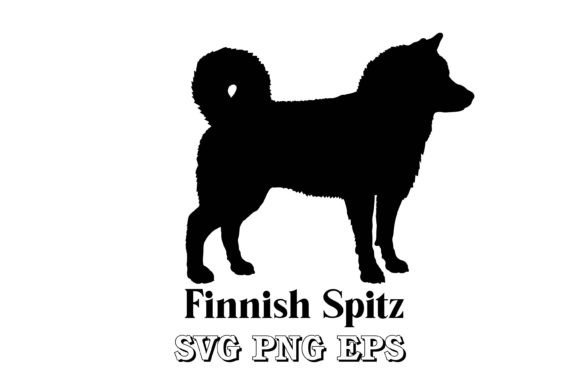
This design comes as a digital embroidery file in vector formats, which means you can scale it, rotate it, and adapt it for different hoop sizes without losing edge quality. That matters more than most beginners realize. A fuzzy or poorly digitized edge turns a professional project into something that looks like a rushed hobby piece. The Finnish Spitz Dog Silhouette avoids that trap. The face is distinct, the ear shape is correct for the breed, and the tail curl reads clearly even at smaller sizes. If you’re an Etsy seller or a small shop owner building a breed-specific collection, this is a strong foundation.
First Impressions: What This Design Communicates to a Buyer
Silhouettes are interesting in the embroidery world. They don’t shout — they suggest. The Finnish Spitz Dog Silhouette leans into that quiet confidence. It’s not a photorealistic portrait, and it’s not trying to be. Instead, it gives you a recognizable outline that feels both modern and timeless. That makes it a versatile asset for crafts and graphics work, especially if you’re creating merchandise that needs to appeal to both casual buyers and serious breed enthusiasts.
When I tested this design on a medium-weight cotton tote bag, the first thing I noticed was how well the shape held its own against the fabric texture. The ear points and tail curve stayed visible without looking fragile. That’s a sign of good digitizing — the kind that anticipates how thread will behave on real materials. For a handmade product like a personalized gift or a boutique item, that clarity translates directly into perceived value. Customers don’t need to be embroiderers to know when something looks sharp versus when it looks muddy.
Real-Life Use Case: Building a Custom Embroidered Sweatshirt
Let me walk you through a recent project where I used the Finnish Spitz Dog Silhouette. A client wanted a custom sweatshirt for their partner who owns a Finnish Spitz. The request was simple: something clean, recognizable, and not overly cutesy. I decided to center the silhouette on the left chest area, about three inches tall, using a dark rust thread on a cream fleece fabric.
I’ve stitched enough sweatshirts to know that fabric thickness and stretch can pull a design off-center if you’re not careful. With this silhouette, I used a medium-weight cutaway stabilizer and a ballpoint needle to avoid damaging the knit. The design ran smoothly through the hoop. The fill stitch covered evenly, and the satin stitch along the outer edge gave it a clean border that framed the shape nicely. The finished piece looked like something you’d find in a boutique — not a mass-produced transfer.
What I appreciated most was how the design didn’t require any last-minute resizing or tweaking. I tested it at 2.5 inches and 4 inches, and both sizes maintained their readability. That kind of flexibility is valuable when you’re stitching for customers who have different preferences for placement. Some want a subtle chest logo; others want a bold back design. The Finnish Spitz Dog Silhouette can handle both without looking stretched or compressed.
Where This Design Shines in Product Categories
Through multiple test runs, I’ve found that this silhouette performs best on products where the shape can stand alone or serve as a clean accent. Here are a few product types where it really delivers:
- Custom apparel – sweatshirts, t-shirts, hoodies, and caps. The silhouette works well as a single-color design on the front, sleeve, or back.
- Tote bags and aprons – the bold shape holds up against frequent handling and washing when stitched with quality thread.
- Embroidered patches – because the outline is clear, it trims easily and sews onto bags, jackets, or hats without losing shape.
- Pillow covers and tea towels – home decor pieces that benefit from a simple, recognizable design rather than complex detail.
- Baby clothes and blankets – at smaller sizes, the silhouette becomes a sweet, understated accent that doesn’t overwhelm the garment.
- Holiday and wedding gifts – a personalized gift with a breed-specific silhouette feels thoughtful without being overdone.
If you’re selling digital products or printable mockups, this design also works well as a preview image. The clean lines photograph nicely, and customers can immediately picture how the finished product will look. That reduces hesitation and increases trust in your listing.
Places Where You Should Use This Design Carefully
No design is perfect for every surface, and the Finnish Spitz Dog Silhouette has a few limitations worth noting. If you’re planning to stitch it on very thin or delicate fabric, test the stitch density first. Silhouettes often rely on fill stitches that can overwhelm lightweight materials like silk or fine cotton. Use a lightweight stabilizer and reduce the stitch count if your software allows it.
On stretchy fabrics like jersey or ribbed knits, be mindful of distortion. The shape can elongate if the fabric shifts during stitching. A no-stretch stabilizer and careful hooping will help maintain the original proportions. I also recommend testing on a scrap piece before stitching the final product, especially if you’re working with dark fabric. The contrast between thread and background matters more with a silhouette than with a detailed design, because the entire shape relies on that single color.
For curved surfaces like caps or small cylindrical items, keep the design size modest. Anything larger than three inches on a curved surface can distort the ear and tail details. If you’re stitching a patch, that’s less of a concern because you can apply it after the curve is formed. But for direct embroidery on caps, test the placement before committing.
Practical Designer Notes Before You Stitch
Before you load the Finnish Spitz Dog Silhouette into your machine, here are a few things I recommend checking. These aren’t exhaustive, but they’ll save you time and thread:
- Test on scrap fabric first – always. Even if you’ve used the design before, fabric behaves differently. Run a test stitch to confirm tension, density, and placement.
- Check thread color contrast – a silhouette lives or dies by its contrast. Test it on both light and dark backgrounds to see which one makes the shape pop.
- Review stitch density – if the fill feels too heavy for your fabric, adjust it in your software or choose a lighter stabilizer.
- Confirm hoop size – make sure the design fits your hoop comfortably without crowding the edges. Leave at least half an inch of clearance.
- Inspect small details – the ear tips and tail curl are the most vulnerable areas. If you’re stitching at a very small size, check that those details won’t become lost or distorted.
- Test in black and white mockups – this helps you see the shape without color distraction. If the silhouette reads well in grayscale, it will read well in any thread color.
- Check licensing – before selling finished products or digital files, confirm the terms for commercial use. This is your responsibility as a seller, and it protects both you and your customers.
How This Design Affects Your Product’s Visual Appeal and Value
In the world of handmade products, clarity is currency. A design that stitches cleanly and reads instantly tells the customer that you care about quality. The Finnish Spitz Dog Silhouette does that. It doesn’t try to do too much, and that restraint is exactly what makes it work for small business merchandise, boutique branding, and personalized gifts.
When a customer sees a breed-specific silhouette on a tote bag or a sweatshirt, they recognize it as intentional. It’s not a generic dog shape. It’s a specific breed, and that specificity builds trust. Whether you’re selling at a craft fair, listing on Etsy, or fulfilling a custom order, the design helps your product feel curated rather than generic. That’s the difference between a $25 sweatshirt and a $50 one.
For commercial embroidery projects, this design also works well as a repeatable asset. You can use it across multiple product lines — apparel, home decor, accessories — and maintain a consistent brand identity. That kind of cohesion is hard to achieve with more complex designs, but a well-executed silhouette makes it look effortless.
Final Thoughts on the Finnish Spitz Dog Silhouette for Crafters and Sellers
I’ve tested a lot of silhouette designs over the years, and this one earns a solid place in my digital file library. It’s reliable, adaptable, and breed-accurate without being fussy. Whether you’re stitching a single personalized gift for a friend or building a full product line for your craft business, the Finnish Spitz Dog Silhouette gives you a clean starting point that you can scale, color, and place with confidence.
If you’re an Etsy seller or a small shop owner looking for a design that works across multiple product types, this is worth your time. Test it on your most common fabric, try a few thread colors, and see how it performs in your own workflow. My guess is you’ll find yourself reaching for it more often than you expect — because sometimes the simplest shapes are the ones that sell best.